
Concord, NC Septic Inspections, Pumping & Repairs
Septic Tank Locating Service in Concord, NC
Matched local pros quickly pinpoint your buried tank and access lids with non‑invasive tools and clear markings.
When you need septic tank locating service fast in Concord, NC
When you can’t find your septic tank, everything else stalls. Pumping can’t start, inspections get delayed, and real estate closings or repairs slip. Septic tank locating service focuses on one urgent goal: identify the exact spot of the tank and lids so work can proceed safely and on schedule.
Older homes around Concord, NC often lack visible risers, and years of landscaping or additions hide the clues. Digging blind risks striking utilities, irrigation, or even the drainfield. With septic tank locating service, matched local pros combine site knowledge with proven tools... electronic line tracing, flushable transmitters (sondes), inspection cameras, and soft probing; to zero in on the tank and mark it clearly. Accurate locating helps prevent damage and sets up the next steps the right way. For background on how onsite systems are laid out, see this helpful EPA overview.
Once the spot is confirmed, the area is flagged or painted and basic measurements are noted so you don’t lose track again. That simple documentation saves time and helps any future maintenance or permitting go smoothly. If you need your tank found before an inspection, pumping, or a planned repair, septic tank locating service gets you from guessing to knowing.
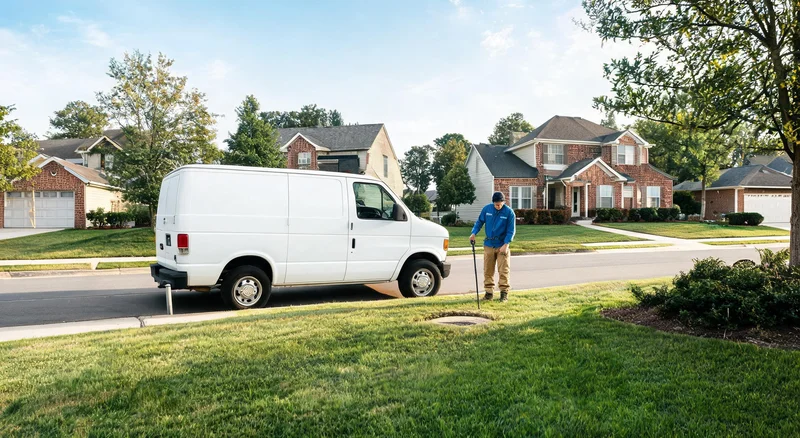
What septic tank locating service involves
Matched local pros start by gathering the clues. They ask about the home’s age, plumbing layout, any past service, and where fixtures group inside. They look for cleanouts, yard vents, and surface cues like snow‑melt lines, depressions, or past patches. When useful, they reference available county records to understand the likely orientation between the home, tank, and drainfield. This quick discovery phase narrows the search area and helps avoid needless disturbance.
Safety comes next. Pros account for known utilities and often request public utility marking before any ground probing. Many also scan for common private lines such as irrigation, landscape lighting, and propane. The goal is to locate your septic components without risking other buried infrastructure. With the search zone defined and safety covered, they stage a clean work area that protects turf and keeps soil where it belongs.
For the actual locating, pros trace the building sewer and then pinpoint the tank. If a cleanout is available, they can run a push camera down the line or insert a small transmitter (sonde) and track its signal from the surface with a receiver. When no cleanout exists, they may trace from a yard vent, pull a toilet briefly to access the line, or use a ferromagnetic locator if the tank has rebar or a metal lid. Soft probing confirms depth cues while avoiding damage to lids or the tank rim.
Once they’ve homed in on the tank, pros verify the footprint and distinguish the inlet and outlet sides. If there are multiple lids, they mark each one. Some sites call for a very small confirmation dig to ensure the mark is precise, especially if the lid is deeper or under mulch. The final step is clear flagging or marking on the surface and a simple sketch with measurements from fixed reference points (for example, a corner of the house). That way, you’ll know exactly where the tank and lids are for future service.
Property Records Review
Check available permit files or past notes to infer likely tank placement and orientation.
Utility Coordination
Account for public utility marks and common private lines to protect underground services.
Electronic Line Tracing
Follow the building sewer path using camera heads or traceable tools to guide surface locating.
Transmitter (Sonde) Locating
Insert and track a small sonde to pinpoint tank location and lid positions from the surface.
Soft Probing And Spot Verification
Use hand probes and, where needed, a small test hole to confirm depth without major digging.
Marking And Documentation
Flag or paint the locations and create a simple sketch with reference measurements for future use.
Septic tank locating service cost factors
Pricing depends first on how large the search area is and how many components need to be found. A home with no records, no cleanout, and extensive landscaping usually requires more time than a site where the search can be narrowed quickly. If both access lids or a distribution box need to be located, that adds scope.
Equipment needs can also affect the price. Using a camera and sonde, tracing long lateral runs, or working around hardscape and tree roots can add complexity. Depth matters, too... very deep lids or locations beneath decks, mulch beds, or dense plantings usually take longer to confirm and mark cleanly.
Site conditions and logistics play a role. Soil type, surface access for tools, seasonal ground moisture, and the need for utility coordination can add steps. For a general sense of typical pricing in our area, see typical septic tank locating service costs in Concord, NC.
Typical septic tank locating service pricing from independent local contractors: $150 - $350. See typical septic tank locating service costs.
Why Choose Us for Septic Tank Locating Service?
Local pros, clearly vetted
You’re matched with experienced septic locators who know Concord, NC soils and site layouts.
Non‑invasive locating methods
Electronic tracing, cameras, and soft probing keep lawns, gardens, and hardscape intact while finding the exact spot.
Accurate marks and a simple map
Clear flagging and easy‑to‑read measurements make future service faster and prevent repeat searches.
Safety‑first approach
Utility awareness and careful site prep reduce the risk of striking buried services.
Consistent communication
You know what’s being checked, what was found, and how to access the tank next time.
How the service works
Share Site Details
Pros review your home’s age, fixture layout, known access points, and any past notes or photos to focus the search.
Records Check And Site Walk
They look for cleanouts or vents, scan for surface clues, and note fixed reference points for later mapping.
Protect Utilities And Plan The Search
Public utility marks are considered and common private lines are accounted for so locating stays safe and targeted.
Trace The Building Sewer
Using a push camera, trace wire, or a small transmitter, the pros follow the sewer path to the tank area.
Pinpoint And Verify
A receiver pinpoints the sonde or line, then soft probing or a small spot check confirms depth and lid position.
Mark And Document
Lids and the tank footprint are flagged or painted, and a simple sketch with measurements is provided for future service.
Handoff For Next Steps
With accurate marks in place, you’re ready for inspection, pumping, maintenance, or repairs without guesswork.
Septic Tank Inspection Concord NC Is Proud to Serve the Concord, NC Area
Septic Tank Locating Service FAQs
How does septic tank locating service work if there isn’t a cleanout?
Local pros can often trace the building sewer from a yard vent, through an interior access point, or by briefly removing a toilet to introduce a camera or transmitter. They may also use ferromagnetic locating if the tank has rebar or a metal lid. The goal is to follow the pipe path and then confirm the tank location from the surface.
Is septic tank locating service safe around utilities and irrigation lines?
Yes. Pros consider public utility markings and take steps to identify common private lines such as irrigation and lighting. They use shallow, careful probing and electronic locating to avoid conflicts. If a small verification dig is needed, it’s performed cautiously and only where indicated.
Can septic tank locating service find both access lids and the distribution box?
In many systems there are two access points on the tank, and pros can mark both once the footprint is confirmed. If you need the distribution box located as well, they can extend tracing and probing to that area and document its position separately.
What should I do to prepare for septic tank locating service?
Clear pathways to suspected areas, note where bathrooms group inside, and unlock gates for access. If you know of private utilities or irrigation lines, point them out. Avoid running large volumes of water right before the visit so the line is easier to trace.
How accurate is the marking from septic tank locating service, and will I get a map?
Surface marks are typically within inches, with depth and site conditions influencing final precision. You’ll receive visible flags or paint plus simple measurements tied to fixed points like a house corner or fence post. That documentation helps future service proceed quickly.
Will septic tank locating service damage my lawn or hardscape, and how long does it take?
The methods are designed to be non‑invasive, using electronic locating and soft probing to avoid unnecessary digging. Most sites can be located in a single visit, with minimal disruption to turf or plantings. If a small spot check is required, it is kept as tidy as possible.
Contact Us Today for a Free Estimate
Know your system's health and avoid costly backups.
Schedule your septic tank inspection today.
Free — no obligations